I have submitted a Public Records Request to the City in an effort to determine why Lynden Smithson was placed on paid administrative leave by Nancy Isserlis, so hopefully we will find out at some point.

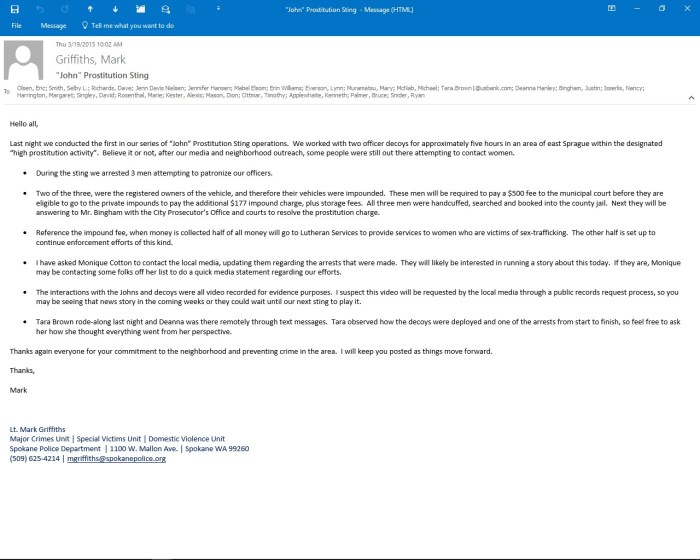
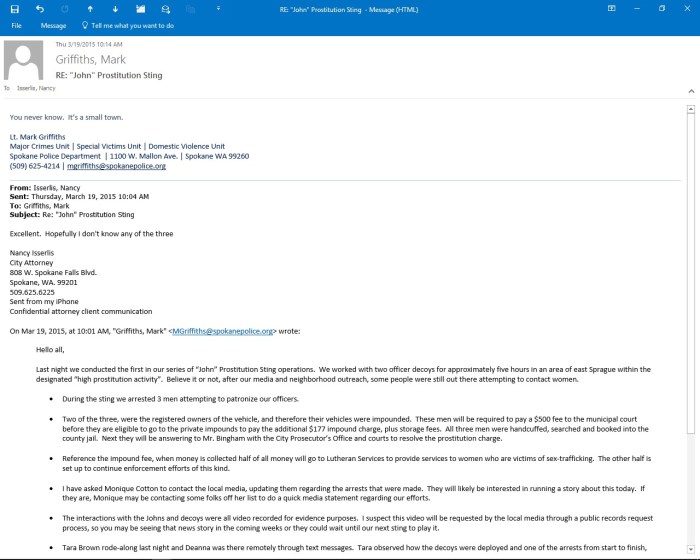
Another email I found interesting in the PRR Doc Dump was this email from Lt. Mark Griffiths, to a number of people including Nancy Isserlis dealing with the important issue of “Human Trafficking” and the approach his Unit was taking.

GETTING TO KNOW THE PLAYERS!
The link below will help you to get to know some of the players associated with this entire affair (no pun intended), including Lt. Griffiths, Lynden Smithson, and even Regina Malveaux a Howard University Grad and close friend of Rachel Dolezal, who defended Dolezal throughout that little episode of the Condon Docudrama.
https://my.spokanecity.org/news/stories/2015/10/26/continuing-the-fight-against-domestic-violence-in-spokane/
What the above press conference tells us, among other things, is that Nancy Isserlis did allow Lynden Smithson to return to work from paid administrative leave to prosecute cases in with the Spokane Regional Domestic Violence Team. My PRR does request all documents concerning his return to work as well.
HERE IT COMES!!!!
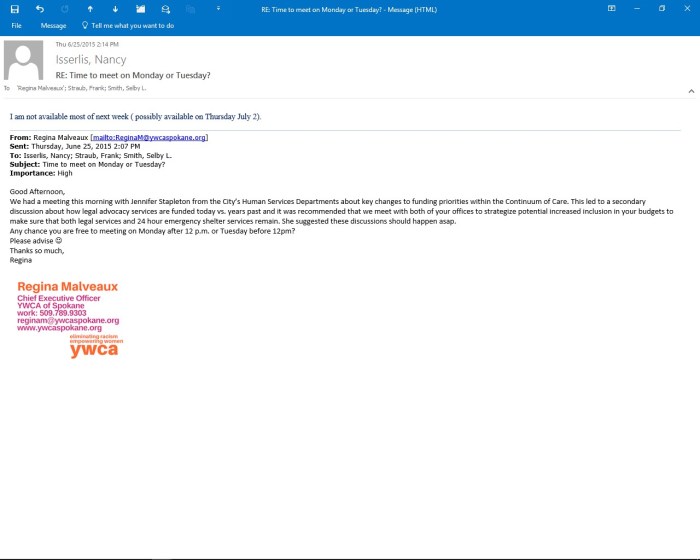
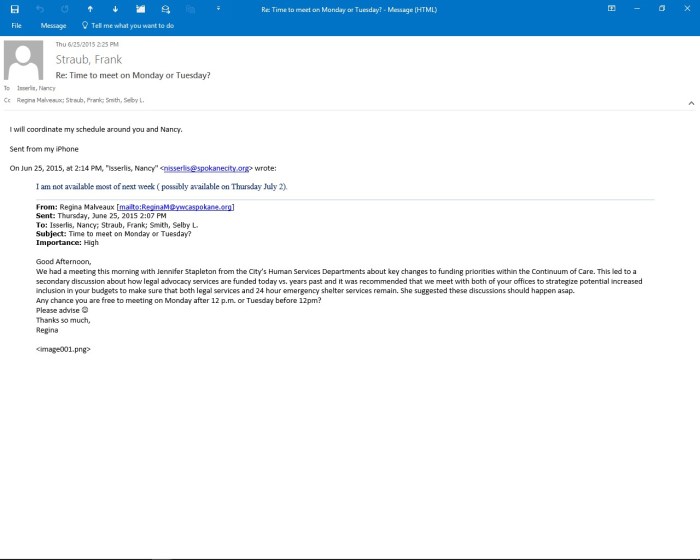
Well at some point you knew it was coming… “We need MORE MONEY!”. It was just a matter of WHEN.
Keep in mind this program has never been evaluated and we don’t know if it is another one of the Straub programs that feels good, and sounds good but may not be a good use of staffing…we just don’t know.
Before the City and SPD start handing out any more money for Condon’s and Straub’s failed programs, this needs to be done and done properly.
COPS/DOJ
Recommendation 10.5
SPD should conduct a staffing analysis to determine if the department is meeting its operational needs and has an adequate amount of staff to ensure its continued mission, objectives, and community policing principles.
SPD should conduct a staffing analysis. This analysis should follow the workload-based model. This model will allow SPD to examine the “levels of demand for police services and matches that demand with the supply for police resources.”143 In addition to examining calls for service received, this model also examines other “operational demands facing the department”144 (e.g., police activities league [PAL], community meetings, training) and makes staffing determinations based on these findings




 Buffalo Brian Breen